

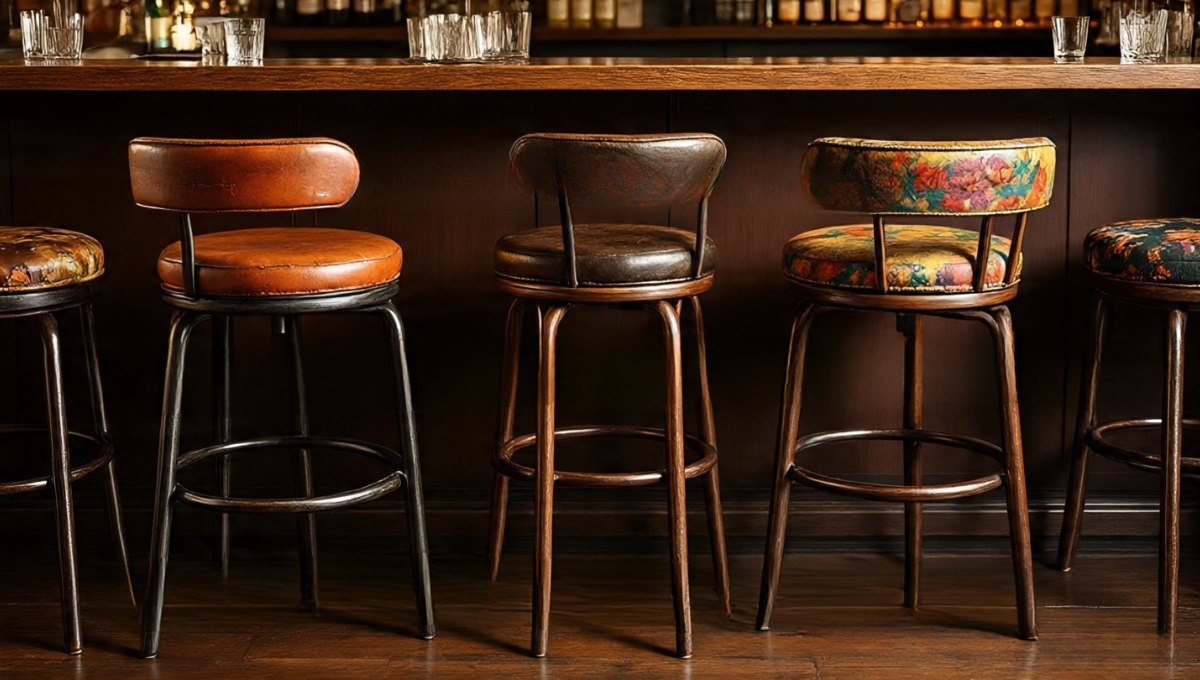
Across restaurants, cocktail lounges, and cozy cafés, there is a noticeable return to the charm of vintage design. The furniture resale market has seen over 70 percent growth in recent years, and hospitality interiors with a nostalgic twist have become increasingly common. Bar stools are at the heart of this revival, blending the elegance of the past with the practicality of today.
These designs resonate deeply with customers, fostering a sense of connection and comfort. They are not just about appearance, but about how people feel when they walk into a space. In themed venues, guests often spend up to 18 percent more per visit when the furniture reinforces the brand’s personality. Upholstery textures, bold colors, and authentic‑looking finishes work together to form a strong visual identity for restaurant bar stools of all types. This article explores how retro fashion inspires upholstery and frame choices. While still ensuring comfort, durability, and long‑term business value.
Upholstery With a Story: Fabrics That Bring Back the Era
Patterns from the 1950s, 60s, and 70s have a powerful ability to bring the past to life. Gingham from the rock‑and‑roll years, playful geometric shapes from the Mod era, and soft, muted florals from the disco decade can all be adapted for modern hospitality use. These vintage-inspired styles stand out most when combined with durable fabrics capable of enduring the demands of busy commercial environments. Vinyl, boucle, tweed, and velour deliver both style and resilience, meeting fire‑safety and stain‑resistance requirements.
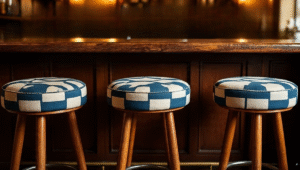
Velvet and high‑performance blends have risen in use by nearly 25 percent in hospitality interiors over recent years, proving that texture plays a lasting role in design. Two‑tone color‑blocking and checkerboard patterns give a playful nod to diner culture while also helping to disguise daily wear. Sustainable fabric options, including recycled plastic blends and certified wool, allow venues to stay eco‑friendly without losing their retro character. Adding ribbed piping or contrast trims sharpens the vintage look and neatly finishes seams. Pairing muted neutrals with bold accent shades like mustard yellow, teal, or cherry red offers visual balance, while high‑density foam cushions hidden beneath the fabric make sure guests remain comfortable during their stay.
Frames That Whisper the Past
The frame of a bar stool holds more than structural value. It can carry the entire personality of the design. Polished chrome, brushed brass, and glossy enamel finishes instantly transport the mind to mid‑century lounges and bustling diners. For a softer, more rustic feel, distressed wood or hand‑rubbed stains can add a sense of heritage. Powder‑coated pastel shades like seafoam green or buttercream work beautifully for spaces that want a lighter retro touch.
Vintage finishes like mottled oxidation, layered paint crackle, or antique bronze patinas evoke a genuine charm that synthetic perfection simply can’t replicate. Using reclaimed wood strengthens the sustainability message while giving every stool a one‑of‑a‑kind appearance. Multi‑step staining followed by a wax finish produces depth and richness reminiscent of 1960s craftsmanship. Small but significant details, such as brass bands or metal caps on the footrest, help connect the frame design seamlessly to the selected upholstery color palette. Stools with a commercial weight rating of 400 to 500 pounds ensure a long lifespan, even in the busiest of venues.
Where Fashion Walks Into Furniture
The relationship between fashion and furniture is surprisingly close. Elements like pin‑tucks from a tailored suit, quilted stitching from a leather jacket, or the contrast lapels of a retro blazer can inspire upholstery detailing on a bar stool. Decorative stitches echoing vintage varsity jackets or saddle‑stitched leather can turn a seat into a statement piece.
Color combinations once popular in wardrobes, such as avocado and harvest gold or powder blue and blush pink, still work well in furniture when balanced carefully. Accessories matter in both worlds, and matte metallic accents paired with bold fabrics can bring polish to a design. Seasonal changes are possible too, with reversible slipcovers giving stools a fresh appearance without a complete re‑upholstery job. Treating stools as if they were a matching outfit ensures a coordinated and deliberate look. Playing with scale by combining oversized prints with solid trims creates visual harmony, while riveted footrests and decorative nailheads mimic the hardware details often found in vintage clothing.
Comfort That Keeps Guests Seated Longer
Comfort is just as vital as aesthetics in creating a successful vintage revival, ensuring that beauty doesn’t come at the expense of usability. Modern cushioning such as high‑resilience foam or gel inserts can be tucked inside period‑style silhouettes, keeping the authentic look while adding softness. Slim bolster cushions wrapping around tapered bucket seats give both support and charm. Swivel and glider features can be hidden beneath skirted upholstery, so functionality does not interrupt the design.
Safety and durability should never be overlooked. Reinforcing frames with plates or ganging kits ensures they meet load requirements and maintain structural integrity. Adjustable height options, fitted with color‑matched enclosures, maintain visual consistency. Performance fabrics like stain‑resistant polyester or vinyl keep stools looking fresh even in high‑turnover settings. Careful attention to ergonomics—such as seat depth, footrest position, and proper height ratios—helps make extended stays more comfortable and enjoyable. For eco‑minded venues, sustainable foam and low‑VOC finishes offer comfort while meeting environmental goals.
The Business Power of Nostalgic Seating
Design is more than decoration. It is a business tool. Venues with striking mid‑century seating often see a 40 percent boost in social media engagement, as guests share their experiences online. The resale and vintage furniture market continues to expand at an annual rate of 7 to 8 percent, demonstrating that retro styles are here to stay rather than just a passing trend. The hospitality seating market in the US is also rising by around 3 to 4 percent each year as owners recognize the value of design‑driven spaces.
Stylish, comfortable stools encourage guests to stay longer, often by 30 to 45 minutes, leading to higher food and beverage sales. Cohesive vintage styling enhances brand identity and enables premium pricing, with some venues charging 10 to 15 percent more without losing customers. Repurposing old frames or upholstery not only reduces costs but also appeals to environmentally conscious diners. Keeping a consistent design also helps reduce replacement and maintenance costs by up to 20 percent compared with mismatched or low‑quality alternatives.
Final Takeaway: Nostalgia With a Purpose
Exactly! Vintage-revival bar stools not only add aesthetic charm but also create a warm, inviting atmosphere while offering practical comfort and durability. They can truly elevate the character and vibe of any establishment.
They are an investment in both style and customer experience. Nostalgia connects with guests emotionally, while well‑designed seating ensures they enjoy that feeling in comfort. It is not about copying the past exactly, but about re‑interpreting it in ways that work for today’s hospitality world.
When upholstery and frame finishes are chosen with intention, they influence how guests perceive the space and how often they choose to return. The right combination of authentic‑looking materials and modern durability creates furniture that can serve as the visual signature of a venue. These stools can be more than just part of the décor.They can become the elements that guests remember long after they have left. In the end, nostalgia may attract attention, but comfort, quality, and thoughtful design make a vintage revival last for years to come.
