

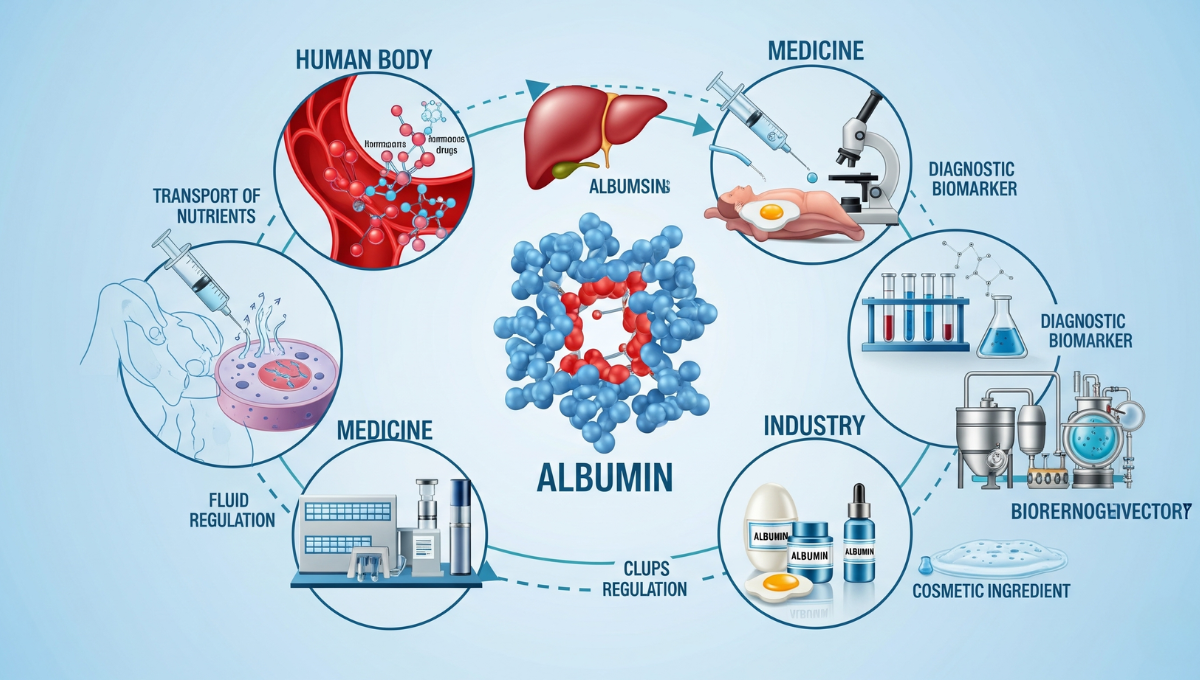
Proteins serve as the fundamental components of life, with albumins emerging as some of the most vital and adaptable among them. Present extensively in both human and animal bodies, albumins play a crucial role in maintaining physiological balance, aiding in medical diagnoses, and facilitating various industrial processes. Whether you’re exploring it from a biological, medical, or nutritional perspective, albumīns play a central role in maintaining balance within the body and beyond.
This in-depth guide explains what albumīns are, their biological importance, medical applications, features, benefits, and broader significance across different industries.
What are Albumīns?
Albumīns are a category of globular proteins that dissolve readily in water, crucial for sustaining osmotic pressure within the bloodstream and facilitating the transport of various molecules across different parts of the body. Unlike structural proteins (such as collagen), albumīns are considered functional proteins, meaning they assist in chemical processes and molecular transport rather than building physical tissue frameworks.
In humans, serum albumin is the predominant variant, accounting for approximately 60% of the total protein content in blood plasma.
Biological Features of Albumīns
Albumīns possess unique structural and chemical properties that make them indispensable:
-
Water Solubility – Unlike many proteins, albumīns dissolve easily in water, allowing them to circulate efficiently in blood plasma.
-
Molecular Binding Ability – They can bind to a wide range of molecules, including hormones, fatty acids, drugs, and toxins.
-
Maintaining Osmotic Pressure – They regulate fluid balance between tissues and the bloodstream, preventing conditions like edema.
-
Neutral pH Stability – Albumīns remain functional in near-neutral pH environments, such as human plasma.
-
Unlike certain other proteins– albumins lack glycosylation, meaning they do not have sugar chains attached. This absence contributes to their unique stability and mobility within the body.
Types of Albumīns
Several kinds of albumīns exist, each with specific roles:
-
Human Serum Albumin (HSA) – The primary albumin in human blood plasma, crucial for transport and fluid regulation.
-
Bovine Serum Albumin (BSA)- sourced from cattle, is extensively utilized in scientific experiments and biotechnological applications.
-
Ovalbumin – Found in egg whites; serves as a nutrient reserve for embryos and is commonly used in research.
-
Plant Albumīns – Present in certain seeds and grains, where they function as storage proteins.
Functions of Albumīns in the Body
Albumīns are not just passive proteins; they actively maintain balance and transport essential compounds.
1. Transport of Substances
Albumīns bind to and carry:
-
Fatty acids
-
Hormones (like thyroxine and cortisol)
-
Drugs and pharmaceuticals
-
Bilirubin and other waste byproducts
2. Regulation of Fluid Balance
By controlling oncotic pressure, albumīns ensure that fluid does not excessively leak out of blood vessels into tissues.
3. Detoxification
Albumins assist in detoxification by attaching to harmful substances and transporting them to the liver or kidneys for elimination.
4. Antioxidant Role
They protect cells by binding free radicals and reducing oxidative stress.
5. Nutritional Role
In both humans and animals, albumīns serve as a reserve protein source that can be broken down for energy when necessary.
Medical Applications of Albumīns
Albumīns are widely used in medicine for both diagnostic and therapeutic purposes.
-
Blood Volume Replacement – Human albumin solutions are given to patients suffering from shock, burns, or blood loss.
-
Drug Delivery Systems – Because albumīns bind well to drugs, they are used in targeted delivery therapies.
-
Diagnostic Testing – Albumin levels in blood and urine are measured to detect conditions like kidney disease, liver dysfunction, and malnutrition.
-
Wound Healing – Solutions containing albumin promote tissue regeneration and aid recovery in patients with severe illnesses.
-
Cancer Research – Albumin-bound drugs (like nab-paclitaxel) are being explored for chemotherapy delivery.
Nutritional and Industrial Uses
Albumīns extend their influence beyond medicine into food, nutrition, and biotechnology.
1. Nutrition and Supplements
-
Found in eggs, milk, and legumes, albumīns provide high-quality dietary protein.
-
Protein powders and supplements often contain albumin-rich sources for muscle recovery.
2. Food Industry
-
Albumin is used as a stabilizer and thickening agent in bakery and confectionery products.
-
Egg-white albumin is used in foaming and emulsifying applications.
3. Biotechnology
-
Bovine serum albumin (BSA) is a staple in lab research for stabilizing enzymes and calibrating protein assays.
4. Pharmaceuticals
-
Albumin-based formulations are employed for controlled drug release systems.
Measuring Albumin Levels: Why It Matters
Monitoring albumin concentrations is essential in clinical practice. Typical tests include:
-
Serum Albumin Test – Evaluates protein levels in the blood to check for liver or kidney disorders.
-
Urine Albumin Test (Microalbuminuria) – Detects early signs of kidney disease, especially in diabetics.
Abnormal albumin levels can indicate:
-
Low Albumin (Hypoalbuminemia): Liver disease, malnutrition, kidney problems, inflammation.
-
High Albumin (Hyperalbuminemia): Usually linked to dehydration or high protein intake.
Benefits of Albumīns
-
Supports Circulatory Stability – Maintains fluid balance and prevents swelling.
-
Aids in Drug Transport – Enhances therapeutic effectiveness of medications.
-
Essential for Healing – Plays a role in tissue regeneration and recovery.
-
Nutritional Value – High-quality protein source in food and supplements.
-
Versatile Applications – Used in medicine, food processing, pharmaceuticals, and biotechnology.
Challenges and Considerations
Despite their importance, albumīns also come with limitations:
-
Allergic Reactions – Some individuals may react to albumin-based medical products.
-
Cost Factor – Human serum albumin is expensive due to complex extraction processes.
-
Storage Requirements – Requires proper conditions for preservation and stability.
-
Over-Reliance in Medicine – Misuse in non-critical cases can strain resources.
The Future of Albumīns
Scientific research continues to expand the use of albumīns. Emerging fields include:
-
Nanomedicine – Albumin nanoparticles for targeted drug delivery.
-
Artificial Albumins – Synthetic proteins designed to mimic natural albumin functions.
-
Regenerative Medicine – Exploring albumin’s role in advanced wound care and tissue engineering.
-
Expanded Nutraceuticals – Albumin-based supplements for sports, fitness, and general wellness.
Conclusion
Albumīns are far more than simple proteins; they are versatile, multifunctional molecules that support life, promote healing, and serve countless applications in healthcare, nutrition, and science. From maintaining fluid balance in the human body to enabling cutting-edge drug delivery systems, their benefits extend across multiple domains.
As research advances, the scope of albumīns will only broaden, making them even more indispensable in medicine, biotechnology, and everyday health. Understanding their features, benefits, and applications allows us to appreciate just how vital these proteins are—not just for survival, but for innovation and progress.
