

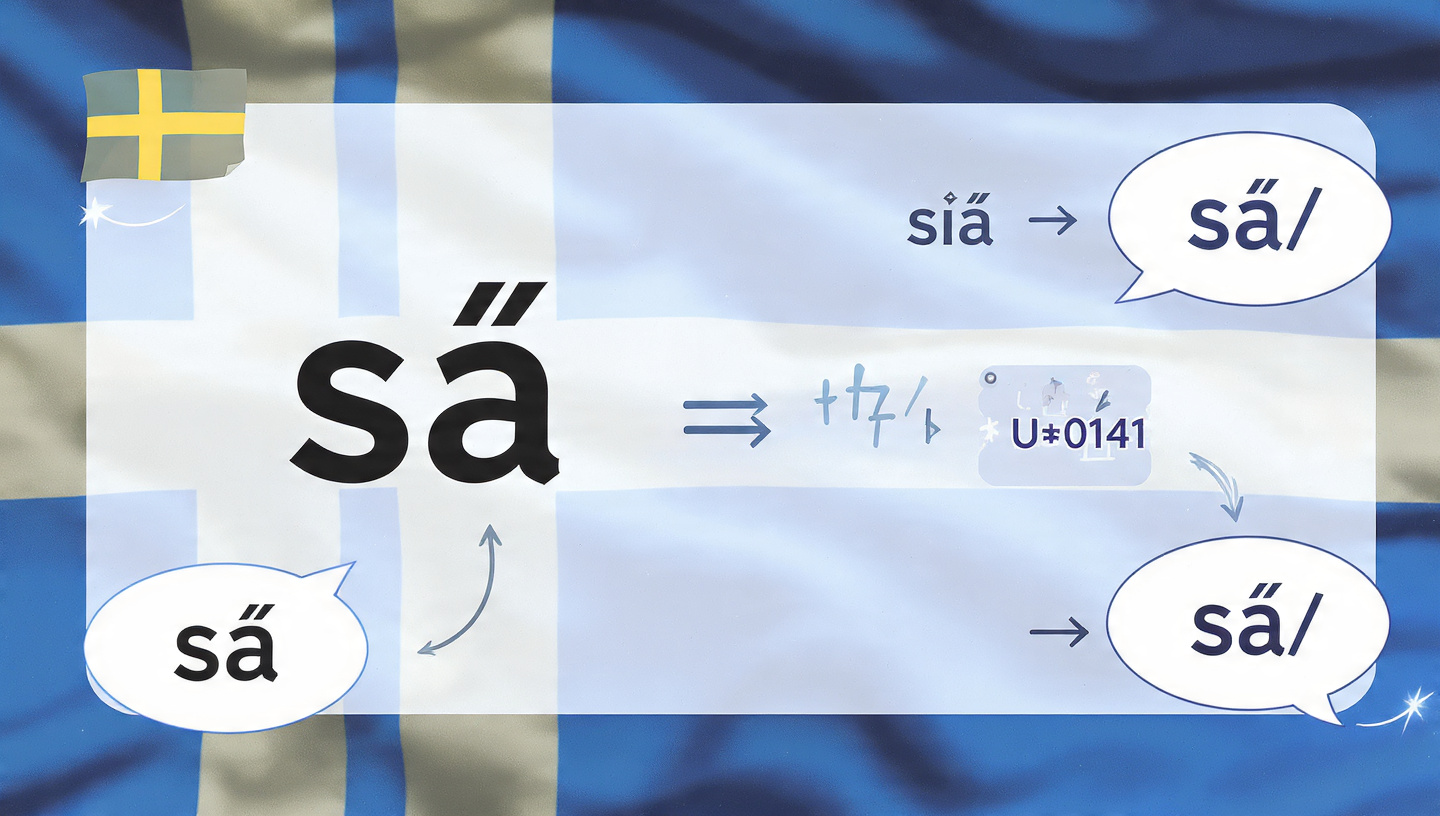
In Scandinavian languages like Swedish and Norwegian, the word sĺ may look unusual or even confusing to readers who aren’t familiar with Nordic writing systems or character encoding.
At first glance, this form might seem like a distinct word or foreign code.
However, in most cases sĺ is simply a technical or encoding variation of the standard word så, which is widely used in everyday language in Sweden and Norway.
The variation arises because older systems or fonts sometimes fail to render the Nordic letter å correctly, substituting it with a visually similar but technically different character like ĺ.
Despite this visual difference, the meaning and function of the word remain unchanged.
Understanding this nuance helps language learners, translators, and digital readers avoid confusion when they encounter the term in texts.
What “Så” Means in Scandinavian Languages
In Swedish and Norwegian, the word så is a common adverb and conjunction that serves several roles depending on context.
It can be translated into English as “so,” “then,” or “thus,” much like how the English word so connects ideas or expresses a result.
For example, in Swedish you might hear “Så bra!” to mean “So good!” or “Om du gör det, så fungerar det” for “If you do that, then it works.”
These examples show how versatile så is: it emphasizes feelings, links clauses, and helps structure conversations and descriptions.
Because så appears so frequently in everyday speech and writing, understanding its meaning is essential for basic fluency in Scandinavian languages.
When you come across sĺ in digital text, the safest interpretation is to read it as så with the same semantic role.
Why “Sĺ” Appears Instead of “Så”
The key reason sĺ appears in texts — especially older online content or improperly encoded files — is technical limitations in character encoding.
Scandinavian alphabets include special characters like å, ä, and ö that aren’t part of the basic English alphabet.
If an older font, software, or system doesn’t support the å character, it may display a substitute such as ĺ that looks similar but has a different Unicode code point.
Unicode is an international standard that assigns a unique number to every character, symbol, or script so computers can process text from any language correctly.
For example, the word Unicode itself has specific pronunciation conventions in English (UK /ˈjuː.nɪ.kəʊd/, US /ˈjuː.nə.koʊd/) and represents this global text‑handling standard.
Older systems from the early days of digital text didn’t always support the full range of Unicode characters.
As a result, when å couldn’t be displayed properly, the text might default to something visually similar like ĺ.
This doesn’t change the word’s meaning, and in modern contexts — including updated operating systems and Unicode‑aware software — such errors are less common.
Unicode and Scandinavian Characters
The Unicode Standard plays a crucial role in ensuring that characters from languages around the world — including Scandinavian ones — are displayed correctly across platforms.
Unicode assigns a unique number to each character so it can be recognized and rendered accurately by computers and devices.
For instance, every letter, number, and symbol has a designated code point in Unicode, which allows consistent representation in digital environments.
When a device supports Unicode fully, characters like å in så will display properly without being replaced by similar‑looking characters like ĺ.
But when a system doesn’t support a character or uses outdated encoding — such as older versions of ASCII or limited font sets — the substitution can occur, producing terms like sĺ.
This is seldom a language issue and more often a technical compatibility issue with older software or fonts.
It’s also worth noting that Scandinavian languages underwent historical changes in how certain letters were written.
Before the modern standardization of å, older spellings like aa or other variations were used historically; encountering different forms in archived texts can be expected.
Pronunciation and Learning Tips
Despite the spelling variation, the pronunciation of så remains consistent with the standard form and does not change when you see sĺ.
For learners of Swedish or Norwegian, focusing on the sound and meaning of så is more important than the specific Unicode representation you might encounter.
In conversation and educational contexts, så is treated like other connecting words in Germanic languages, fulfilling a role similar to “so” or “then” in English.
As you become more familiar with Scandinavian writing patterns, you’ll notice that special characters like å, ä, and ö are integral to correct pronunciation and meaning.
Recognizing how encoding can affect appearance helps in reading older texts or troubleshooting display issues, but it doesn’t alter the underlying language grammar or vocabulary.
Conclusion: Understanding “Sĺ” in Context
In summary, sĺ is not a separate word with unique meaning — it’s normally a technical variation of the Scandinavian word så, which can mean so, then, or thus depending on context.
This variation appears mainly due to text encoding or font limitations rather than language differences.
Thanks to the Unicode Standard, modern devices and systems can correctly display special Nordic characters, but it’s still useful to recognize why variations like sĺ might show up.
For language learners and digital readers alike, knowing that sĺ and så share the same meaning helps you interpret Scandinavian texts accurately and confidently, regardless of how the characters appear on your screen.
