

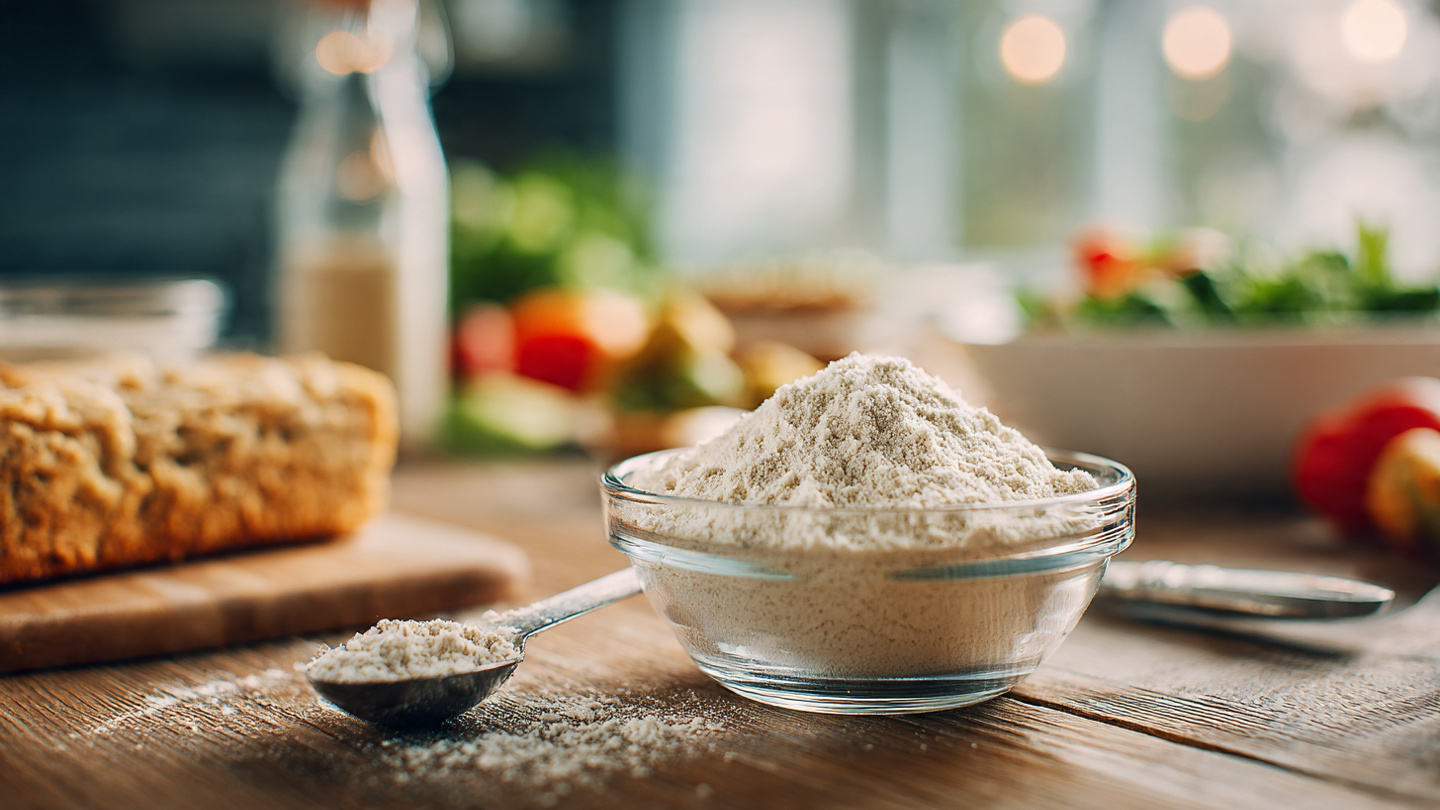
Xanthan gum is a widely used food ingredient found in many processed foods, especially those that require thickening, stabilizing, or improved texture.
It’s a polysaccharide produced by fermenting sugars with a bacterium called Xanthomonas campestris, and it’s approved as a safe food additive in many countries.
This guide explains what xanthan gum is, how it’s used in food, whether it’s safe to eat, and what potential benefits or concerns are associated with its use.
What Is Xanthan Gum and Why Is It Used in Food?
Xanthan gum is a food additive that’s best known as a thickener and stabilizer.
When mixed with liquids, even in very small amounts, it creates a gelatin‑like suspension that helps ingredients stick together and improves the texture of sauces, dressings, soups, and baked goods.
In foods marketed as gluten‑free, xanthan gum is particularly valuable because it mimics the binding effect that gluten normally provides, improving the structure and elasticity of bread, cakes, and other baked items.
It’s also used to prevent separation in products like salad dressings and sauces, helping oils and liquids stay uniformly mixed.
Is It Safe to Use Xanthan Gum in Food?
In general, yes — xanthan gum is considered safe when used at the amounts typical in food products.
Regulatory bodies such as the U.S. Food and Drug Administration (FDA) and the European Food Safety Authority (EFSA) have reviewed its use and accepted it as a safe food additive.
Most foods contain only a very small amount of xanthan gum — usually less than 0.5% of the product — and typical daily intake from food remains low.
The body cannot digest xanthan gum because it’s a form of soluble fiber, meaning it passes through the digestive system without being absorbed for energy.
Potential Health Benefits
Although xanthan gum is primarily used for texture and food processing rather than nutrition, research has found some interesting effects when it’s consumed in larger amounts:
-
Digestive Effects: Because it behaves as soluble fiber, xanthan gum may help move water into the intestines, which can soften stool and support regular bowel movements in some people.
-
Blood Sugar Moderation: Larger doses of xanthan gum have been linked with slowing the absorption of sugars in the gut, which may help moderate blood sugar spikes after eating.
-
Cholesterol Effects: Some small studies suggest xanthan gum may help lower cholesterol levels when consumed in very high amounts, but these effects are not well‑established and don’t occur at typical dietary levels.
Keep in mind these potential benefits come from much larger doses than what’s normally present in food, and the evidence is mixed.
Possible Drawbacks and Precautions
For most people, eating foods that contain xanthan gum does not cause serious problems.
However, there are a few situations where caution may be needed:
-
Digestive Sensitivity: Large amounts may cause gas, bloating, or softer stools because of its high soluble fiber content.
-
Allergies: While uncommon, people with severe allergies to ingredients used in fermentation (like corn or soy) might react to trace residual proteins.
-
Infants: Certain xanthan gum‑based products added to formula have been associated with digestive issues in premature infants, so they should avoid products with xanthan gum until more is understood.
At standard food usage levels, though, adverse effects are rare, and regulatory agencies consider it safe for the general population.
How to Use Xanthan Gum in Cooking
If you choose to use xanthan gum in your own cooking or baking:
-
Only a tiny amount is needed — usually ¼ to ½ teaspoon per cup of liquid in sauces or dressings.
-
In gluten‑free baking, it helps give structure and elasticity to doughs that lack gluten.
-
It’s important to mix it well into dry ingredients before adding liquids to prevent clumping.
Because it’s tasteless and odorless, xanthan gum won’t change the flavor of your food.
Final Verdict: Should You Put It in Food?
Yes — xanthan gum is safe to use in food when added at typical culinary levels, and regulatory agencies around the world endorse its safety as a food additive.
It provides functional benefits like texture improvement, stability, and gluten‑free binding — and any health effects from normal consumption are minimal and generally benign.
If you are particularly sensitive to fiber or have specific allergy concerns, you may want to monitor how your body responds or choose alternative thickeners.
