

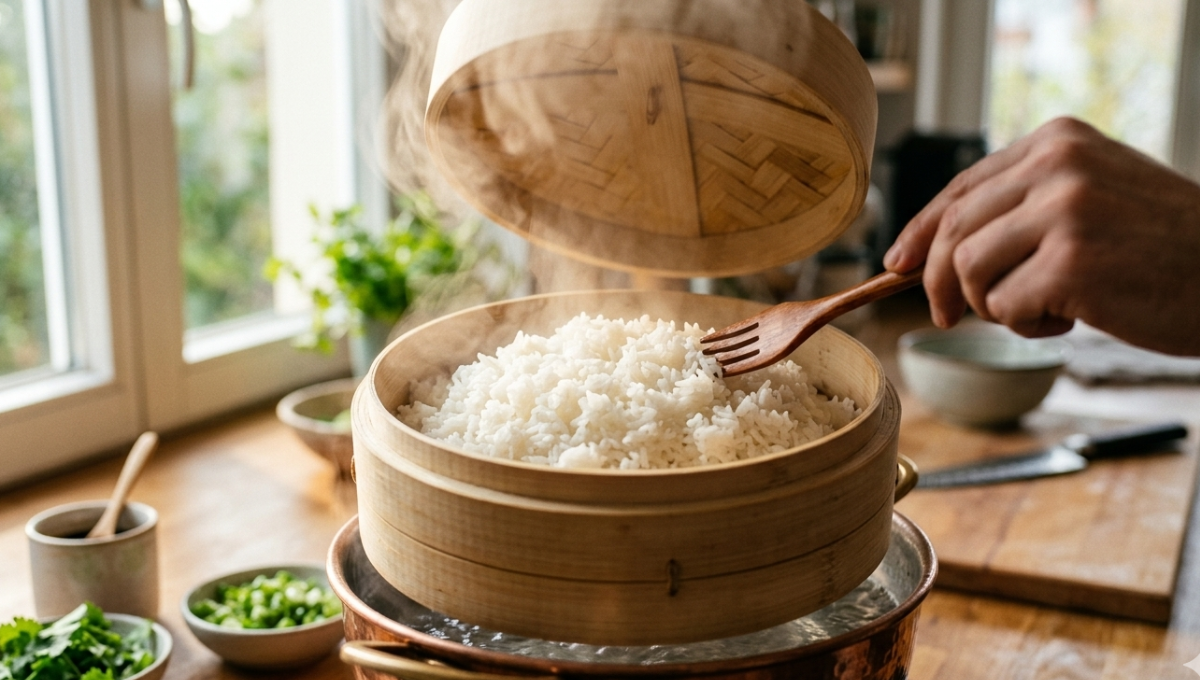
Dampfreis is a German term that literally means steamed rice, combining “dampf” (steam) and “reis” (rice).
In essence, it refers to rice that is cooked gently with steam rather than boiled in a large volume of water.
This method creates rice that is light, fluffy, and separate, making it a favorite choice for both everyday meals and special dishes.
Steaming rice has a long history, originating in Asia and spreading across the world as a healthy, texture‑preserving cooking method.
Modern kitchens and pre‑steamed rice products make the process even more convenient without sacrificing nutrition or flavor.
In this guide, we’ll walk through what makes Dampfreis special, how it differs from other rice types, how to cook it perfectly, and why it’s considered a smart choice for healthy diets and versatile meals.
What Makes Dampfreis Different from Other Rice
The key difference between Dampfreis and traditional boiled rice lies in the cooking technique.
With ordinary boiled rice, grains are submerged directly in water, which can sometimes lead to uneven texture or loss of nutrients into the cooking water.
In contrast, Dampfreis is cooked with steam that gently surrounds each grain, allowing for even heat distribution and consistent results.
Because it’s steamed, the rice grains tend to stay separate and fluffy, rather than clumping together or becoming mushy.
This makes Dampfreis especially appealing for dishes where texture matters, such as rice bowls, stir‑fries, or side dishes accompanying sauces and curries.
The gentle cooking process also helps preserve more of the rice’s natural nutrients compared with methods that wash away vitamins and minerals.
How to Cook Dampfreis Perfectly
Cooking Dampfreis can be done with or without a specialized steamer, and the essential steps remain the same.
Start by rinsing the rice under cold water until the rinse water runs clear; this removes excess starch, which can prevent grains from sticking together.
Some cooks choose to soak rice for 20–30 minutes before steaming, which helps the grains cook evenly and stay tender.
If you use a steamer, place the rinsed rice in the steaming basket above boiling water and let the steam carry the heat through the grains for about 20–30 minutes, depending on the rice type.
If you are steaming in a pot without a separate steamer, use a tight‑fitting lid and a water ratio that keeps the rice above the water level, allowing steam to cook it.
After cooking, let the rice rest covered for about 10 minutes so residual steam finishes the process.
Finally, fluff with a fork before serving to separate the grains perfectly.
Nutritional and Health Benefits
One of the primary reasons Dampfreis is considered a healthy cooking method is its ability to retain more nutrients than boiling, where vitamins and minerals may leach into the water and be discarded.
Because the grains are cooked in steam rather than submerged, more water‑soluble vitamins like B vitamins and important minerals such as magnesium and potassium remain intact.
Steamed rice is also generally low in fat and sodium if prepared without added oils or butter, making it suitable for balanced diets.
It’s naturally gluten‑free, which benefits people with celiac disease or gluten sensitivities.
The gentle cooking process improves digestibility, making Dampfreis easy on the stomach and a reliable choice for children, older adults, and anyone with a sensitive digestive system.
Pairing steamed rice with lean proteins, vegetables, and healthy fats can help balance the meal and support steady blood sugar levels because the carbohydrates are absorbed more slowly when combined with fiber and protein.
Comparison with Other Rice Styles
Understanding how Dampfreis compares to other rice types can help you choose the best option for your meals.
Parboiled rice, often used interchangeably with steamed rice in some regions, involves soaking, steaming, and drying the rice before packaging, which also helps retain nutrients but is not the same as home steaming.
Dampfreis focuses on steaming the rice as part of the cooking process itself, resulting in a distinct texture.
Boiled rice, while traditional in many cuisines, can lose more nutrients and may result in sticky or uneven grains if not cooked with precise water ratios.
On the other hand, instant or pre‑cooked rice is convenient but often sacrifices texture and some nutritional value compared with freshly steamed rice.
Finally, choosing whole‑grain or brown rice for steaming can add extra fiber and micronutrients, but it usually takes longer to cook.
Ways to Enjoy Dampfreis
One of the greatest advantages of Dampfreis is its versatility.
It pairs wonderfully with flavorful curries from Indian, Thai, or Japanese cuisine, where the light texture absorbs sauces effectively.
Steamed rice also makes an excellent base for rice bowls topped with vegetables, proteins, or sauces, allowing for a balanced one‑bowl meal.
Adding Dampfreis to soups or stews thickens them slightly and adds heartiness.
It is equally delicious served simply with grilled fish, roasted vegetables, or mixed into cold salads with herbs and olive oil for a refreshing twist.
For creative variations, use broth instead of water to infuse the rice with savory flavor, or add aromatic spices like cinnamon or cardamom during steaming.
These subtle techniques elevate plain steamed rice into a memorable component of your meal.
Dampfreis in a Healthy Lifestyle
Incorporating Dampfreis into a balanced diet supports a range of health goals.
For weight management, its low fat content and slow‑digesting carbohydrates help maintain energy without excess calories.
For athletes, the carbohydrates provide reliable fuel for workouts and recovery.
People controlling blood sugar can benefit from pairing steamed rice with fiber‑rich vegetables and proteins to moderate glycemic response.
For those following gluten‑free or plant‑based diets, steamed rice offers a staple carbohydrate source that fits seamlessly into many meal plans.
Finally, the comforting simplicity and digestibility of Dampfreis make it a go‑to for meals during seasonal changes, busy days, or when a gentle, nourishing base is needed.
Conclusion
Dampfreis: What It Is, How to Cook It & Health Benefits of Steamed Rice highlights how a simple cooking method can transform one of the world’s most widely consumed foods.
By cooking rice with steam instead of boiling it, you preserve nutrients, improve texture, and create a versatile base for healthy, balanced meals.
Whether served with bold sauces, fresh vegetables, or simply seasoned, steamed rice supports both culinary creativity and mindful eating.
Incorporating Dampfreis into your regular cooking routine offers taste, nutrition, and a satisfying way to enjoy a global staple food.
