

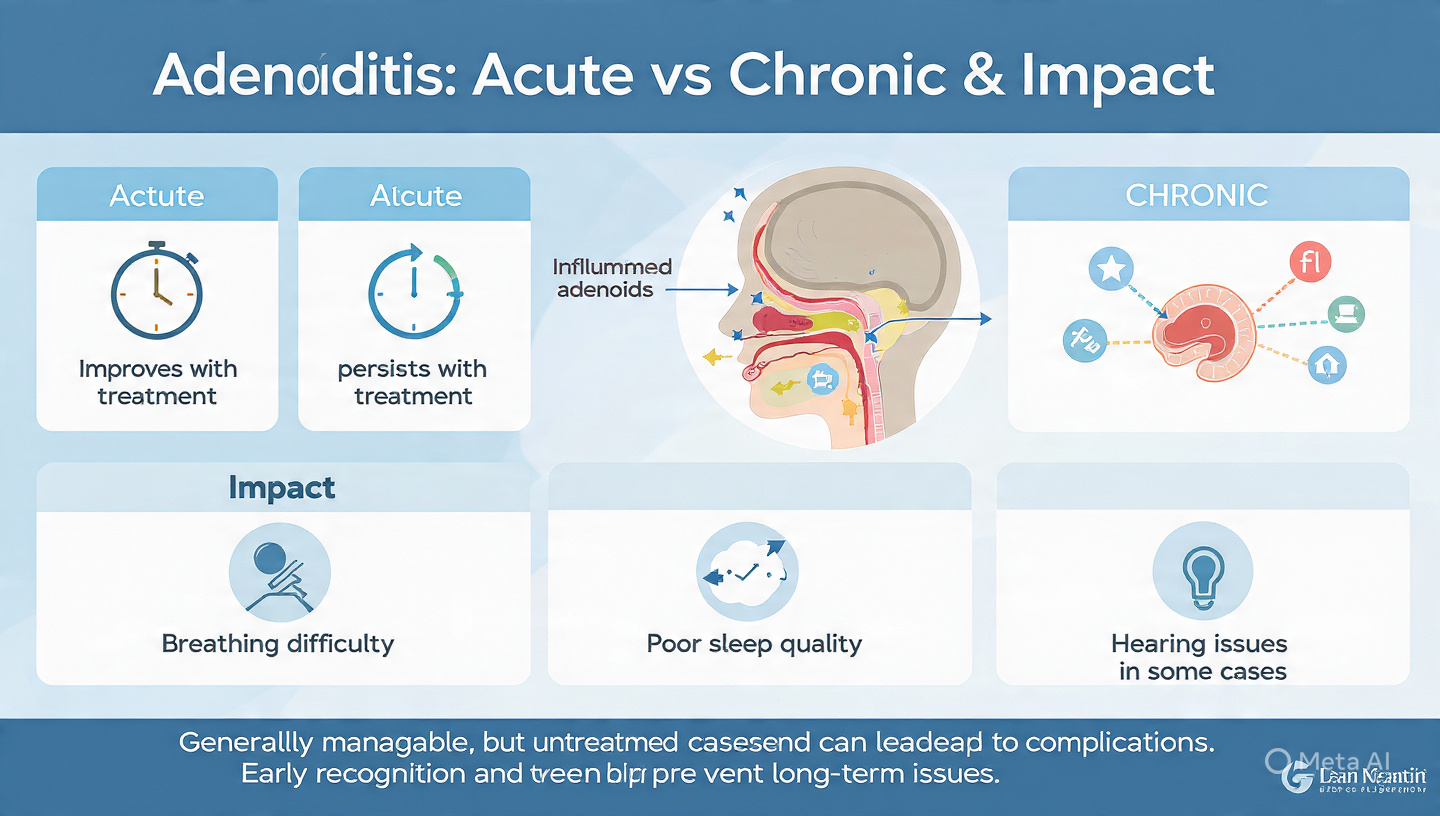
Adenoidid is a condition in which the adenoids—small glands located behind the nose and at the top of the throat—become swollen or infected.
These glands are part of the body’s immune system and help trap harmful bacteria and viruses entering through the nose.
Adenoidid is most common in children, particularly between the ages of 3 and 10.
During this stage, the adenoids are larger and more active, making them more prone to infection.
As children grow older, the adenoids naturally shrink and become less significant.
This is why the condition is less frequently seen in teenagers and adults.
Key Facts About Adenoidid
Adenoidid can be either acute or chronic depending on how long the inflammation lasts.
Acute cases usually develop quickly and improve with treatment, while chronic cases may persist or recur over time.
It is often linked to common respiratory infections such as colds or the flu.
These infections can spread to the adenoids and cause swelling.
Enlarged adenoids can block airflow through the nasal passages.
This can affect breathing, sleep quality, and even hearing in some cases.
Although generally manageable, untreated Adenoidid can lead to complications.
Early recognition and care are important for preventing long-term issues.
Common Symptoms
The symptoms of Adenoidid can vary, but several signs are commonly observed.
Recognizing these early can help ensure timely treatment.
A blocked or runny nose is one of the most noticeable symptoms.
Children may also breathe through their mouth due to nasal obstruction.
Snoring and restless sleep are frequent issues.
In more severe cases, breathing pauses during sleep may occur.
Other symptoms include sore throat, ear pain, and a feeling of pressure in the ears.
Some children may also develop a nasal-sounding voice.
Fever and general discomfort can occur during active infection.
These symptoms may sometimes be confused with other illnesses.
Causes and Risk Factors
The primary cause of Adenoidid is infection by viruses or bacteria.
These pathogens can easily reach the adenoids through the nasal passages.
Repeated infections increase the risk of chronic inflammation.
This can keep the adenoids enlarged for extended periods.
Allergies are another contributing factor.
They can cause ongoing irritation and swelling in the nasal area.
Environmental factors such as pollution, dust, and smoke can worsen symptoms.
Exposure to these irritants can make the condition more severe.
How Adenoidid Is Diagnosed
Doctors typically diagnose Adenoidid based on symptoms and physical examination.
They may ask about breathing patterns, sleep habits, and frequency of infections.
A throat, nose, and ear examination is usually performed.
This helps identify signs of inflammation or blockage.
In some cases, a small camera or imaging test may be used.
This allows doctors to view the adenoids more clearly.
Hearing tests may be recommended if ear issues are suspected.
This is because enlarged adenoids can affect ear function.
Treatment Options
Treatment for Adenoidid depends on the severity and cause of the condition.
Mild cases often improve with rest and supportive care.
Pain relievers such as Paracetamol or Ibuprofen may be used to reduce fever and discomfort.
These medications help manage symptoms effectively.
If a bacterial infection is present, antibiotics may be prescribed.
Completing the full course is important to prevent recurrence.
Nasal sprays or saline rinses can help relieve congestion.
These treatments make breathing easier and reduce irritation.
In severe or recurring cases, surgery may be considered.
An Adenoidectomy involves removing the adenoids to prevent further infections.
Possible Complications
If left untreated,Adenoidid can lead to several complications.
These may affect overall health and quality of life.
Chronic ear infections are one of the most common complications.
This can sometimes lead to temporary hearing loss.
Sleep disturbances can also become serious.
Poor sleep may affect a child’s growth, behavior, and concentration.
In rare cases, severe breathing problems may develop.
These require immediate medical attention.
Prevention Tips
Although not all cases can be prevented, certain steps can reduce the risk of Adenoidid.
Simple habits can make a significant difference.
Encouraging regular handwashing helps prevent infections.
Avoiding close contact with sick individuals is also beneficial.
Keeping the home environment clean and smoke-free is important.
This reduces irritation in the respiratory system.
Managing allergies effectively can also lower the risk.
Proper care helps prevent chronic inflammation.
Conclusion
Adenoidid is a common condition, especially in children, but it is usually easy to manage with proper care.
Understanding its symptoms, causes, and treatment options allows for timely and effective action.
With early diagnosis and appropriate treatment, most children recover quickly without complications.
In more severe cases, medical interventions such as surgery can provide long-term relief.
Staying informed and proactive is the best way to ensure better respiratory health.
With the right approach, Adenoidid can be managed effectively and safely.
