

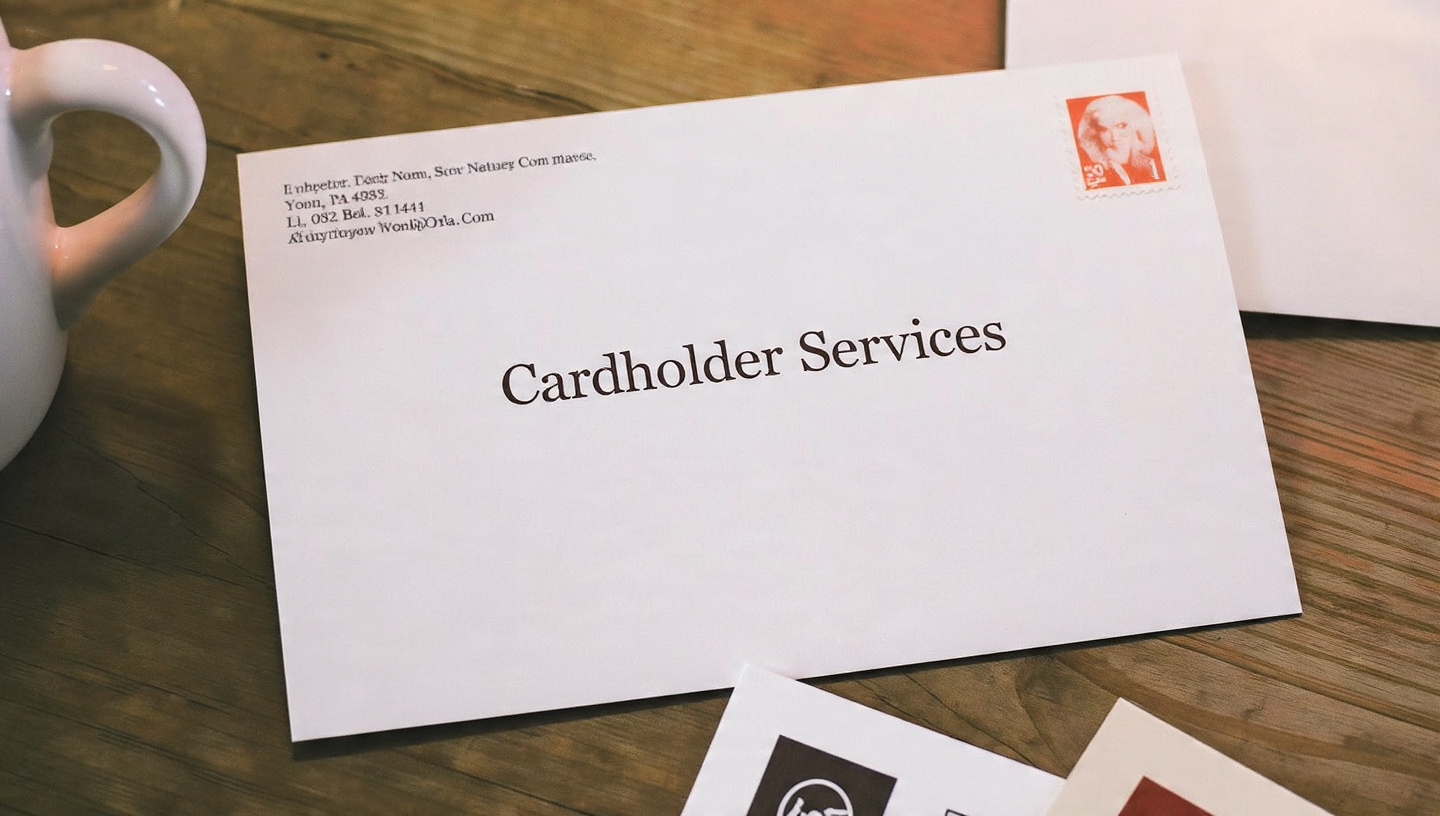
Receiving a Cardholder Services letter in the mail from Jacksonville, Florida 32255 can be confusing and concerning, especially if you weren’t expecting correspondence from a bank, card issuer, or payment service.
Many people search online to understand whether these letters are legitimate financial notices or potential scams trying to harvest personal data.
This comprehensive guide will help you understand what these letters are, why they arrive, and how to determine whether they are real or fraudulent.
At first glance, a letter with a generic return address and the words “Cardholder Services” printed on the envelope can feel unsettling.
Unlike official letters from recognizable banks that use branded stationery and clear contact information, these letters often display only a P.O. Box and vague terms.
That unfamiliar presentation leads many recipients to question its authenticity and search for answers online.
What Is a Cardholder Services Letter?
A Cardholder Services letter is a mailed notice related to a credit, debit, or prepaid card account, typically about account activity, compliance, or service issues.
Banks, card issuers, and their processing partners sometimes use this generic term to describe communications sent to cardholders.
These might include account updates, policy changes, or legal disclosures required by financial regulations.
Importantly, the phrase “Cardholder Services” itself is not the name of a specific company or bank.
Instead, it’s a general term that covers administrative support functions tied to card accounts, such as customer support, dispute handling, or compliance notifications.
That can make it harder for recipients to recognize the source.
The Jacksonville 32255 address often appears on these letters because many large financial institutions and payment processors use centralized PO Boxes to handle high volumes of correspondence.
This doesn’t automatically make the letters fraudulent, but it does mean you need to investigate further to confirm legitimacy.
Common Reasons These Letters Are Sent
Legitimate cardholder services letters are sent for a variety of normal business reasons.
These include required regulatory notices, updates about account changes, and compliance or verification requests.
For example, financial institutions may need to notify you of updates to terms, changes in policies, or required identity validation.
Some letters may be informational, such as confirming that a card has been replaced, expired, or compromised.
Others are compliance notices sent to meet legal requirements and may not require any action from you unless stated clearly.
Because these can be important, it’s worth reviewing them carefully rather than discarding them immediately.
However, because the term “Cardholder Services” is broad and generic, scammers sometimes exploit it to make fraudulent mailers seem official.
This ambiguity is one reason why recipients often question whether the notice relates to a real financial product or is part of a scam.
Signs It May Be Legitimate
A letter might be legitimate if it contains clear references to an account you recognize, such as partial account numbers that correspond to one of your cards.
Legitimate communication will typically feature professional formatting, proper bank branding, and a contact phone number that matches the number on the back of your physical card or official statements.
This makes it possible to verify the letter by contacting your issuer directly through trusted channels.
Another positive sign is when the mail’s content appears consistent with recent account activity you know about — such as a recent replacement card, compliance update requested by your bank, or known regulatory notice.
In these cases, the letter serves as a backup communication method to ensure you receive required information.
Red Flags for Scam or Fraudulent Letters
There are several strong indicators that a cardholder services letter may be fraudulent.
One key red flag is when the letter requests highly sensitive personal information, such as your full Social Security Number, full card numbers, PINs, or login credentials.
Legitimate banks will never ask for this level of identity verification over mail alone.
Another significant warning sign is when the letter lacks recognizable bank branding or contact information, or when it directs you to call a number that doesn’t match the official helpline on your card.
Many consumers reporting these letters online describe receiving envelopes that refer to a card they don’t have or ask them to verify a number that isn’t a genuine card number.
Scammers often use generic language and urgent requests to create a sense of pressure, attempting to trick recipients into responding before verifying the source.
If the notice claims consequences like immediate account closure or legal action unless you act quickly, treat it with skepticism.
How to Check Before Responding
Before taking any action, you should verify the letter independently.
Don’t use the contact details contained in the letter itself — instead, call your bank using the number on the back of your card or log into your official mobile app or online account.
In many cases, you’ll find the same notice or alert in your secure message center — confirming its authenticity.
If the letter refers to an account you don’t recognize, don’t respond at all.
This could be triggered by a data error or, in many cases, a scam attempt.
Monitoring your credit reports and staying alert for unexpected accounts can also help protect you from identity theft.
Conclusion
A Cardholder Services letter from Jacksonville, FL 32255 can be either a legitimate financial notice or part of a scam — the determining factor is not the address itself, but what the letter contains and how it asks you to respond.
To protect yourself, always verify through trusted channels, avoid providing sensitive data based on unsolicited mail, and contact your issuer directly if anything seems unclear.
Being informed and cautious ensures you handle these letters safely and avoid falling victim to fraud.
