

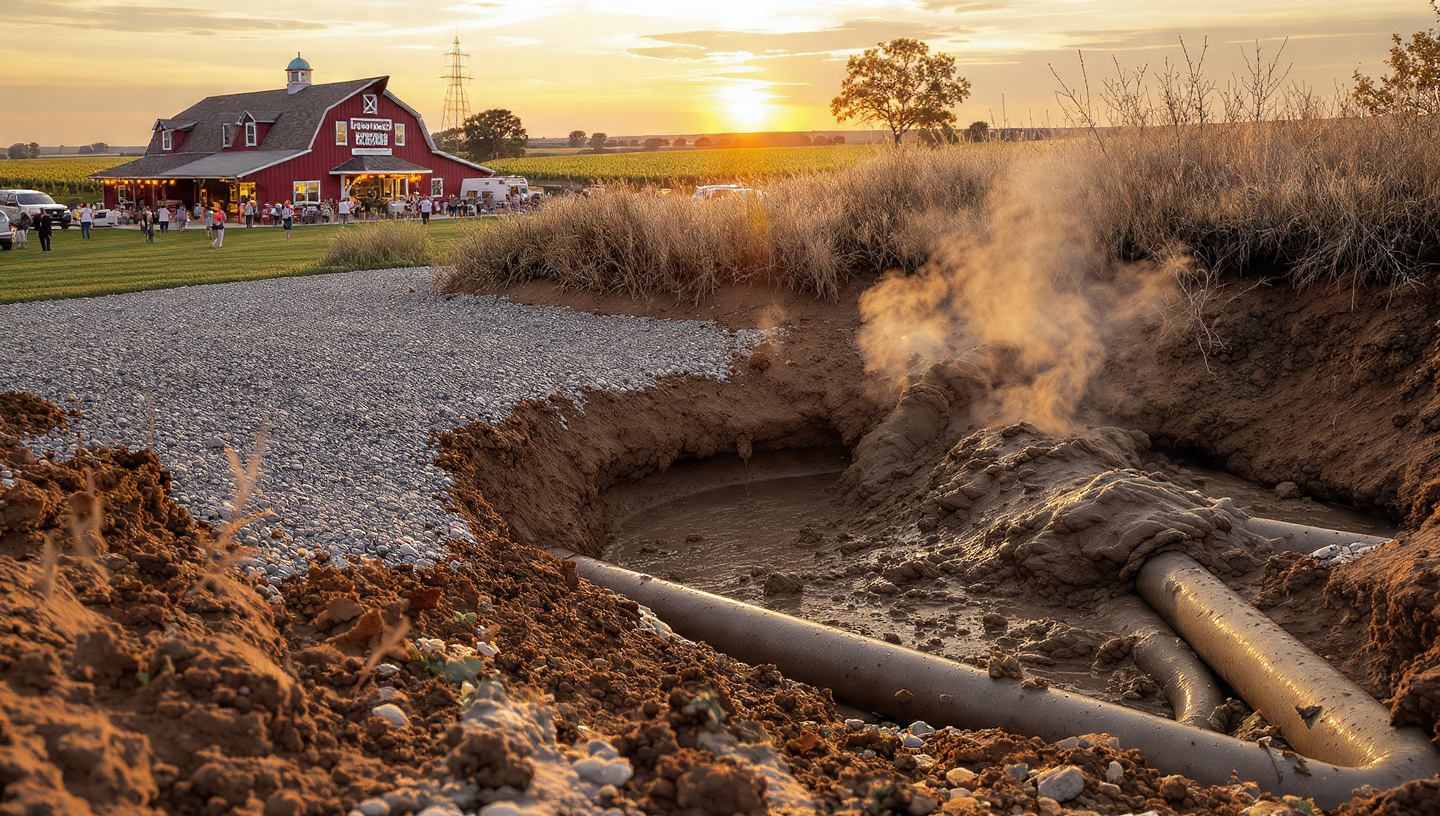
The craft beer boom has transformed the American landscape. Thriving independent breweries are no longer confined to industrial parks; they are increasingly expanding into picturesque, agriculturally zoned rural properties. These “farm breweries” offer patrons sweeping views, open spaces, and fresh air.
However, beneath the idyllic taprooms and food trucks lies a severe, unseen infrastructure crisis.
Because these rural properties are almost never connected to a municipal sewer grid, they must rely on subterranean, decentralized wastewater systems. The romanticized idea of brewing beer on a farm violently collides with the brutal realities of industrial chemistry. When a facility attempts to process commercial brewing effluent through a system designed for standard domestic waste, the result is a rapid, catastrophic, and deeply expensive ecological failure.
The Anatomy of Brewery Effluent
Brewing beer requires a staggering amount of water. On average, it takes five to seven gallons of water to produce a single gallon of beer. The leftover water does not just vanish; it goes down the floor drains.
This wastewater is fundamentally different from what comes out of a household bathroom or a standard restaurant kitchen. It is a highly potent chemical cocktail consisting of leftover wort (sugar water), trub (protein and hop debris), dead and living yeast, and aggressive industrial cleaning chemicals.
When this mixture enters a standard biological holding tank, it triggers a chain reaction that destroys the system from the inside out.
The BOD Explosion
The first major threat is an invisible metric known as Biological Oxygen Demand (BOD).
BOD measures the amount of oxygen that microorganisms need to break down the organic material present in the water. Standard domestic wastewater has a relatively low BOD (around 200 to 300 mg/L), which the anaerobic bacteria in a standard tank can easily process.
Brewery wastewater, packed with unfermented sugars and proteins, routinely hits a BOD of 3,000 to 5,000 mg/L—and can sometimes spike up to 100,000 mg/L if a bad batch of beer is dumped down the drain. This massive organic load instantly overwhelms and suffocates the natural bacterial colony in the tank. The system is essentially overfed to the point of biological starvation.
The pH Pendulum
If the sugars don’t kill the bacteria, the cleaning cycles will.
Maintaining sanitary stainless steel brewing equipment requires aggressive chemical warfare. Brewers routinely flush their tanks with caustic soda (a highly alkaline chemical with a pH of 13) to strip organic matter, followed by peracetic acid or phosphoric acid (highly acidic chemicals with a pH of 2) to sanitize.
When these chemicals are washed down the floor drains, they create violent pH swings inside the wastewater holding tank. The delicate microbes responsible for digesting solid waste can only survive in a relatively neutral pH environment (around 6.5 to 7.5). The influx of brewery caustics and acids effectively sterilizes the tank, entirely halting the breakdown of human and commercial waste.
The “Yeast Monster”
Perhaps the most mechanically destructive element of brewery waste is live yeast.
In a healthy wastewater system, heavy solids sink to the bottom (sludge), while clear liquid sits in the middle and flows out to the drain field. But when live yeast enters the tank, it finds a dark, warm environment filled with organic material. It begins to actively ferment the waste.
Fermentation produces carbon dioxide. As these gas bubbles rise from the bottom of the tank, they act like tiny elevators, carrying the heavy sludge and suspended solids right to the surface. Instead of settling, the solids are pushed out of the tank and directly into the delicate soil trenches of the leach field. The solids rapidly plug the microscopic pores of the soil, forming an impenetrable concrete-like barrier. Once the soil stops absorbing water, the raw, toxic effluent backs up into the brewery or pools on the lawn.
Protecting the Soil
Preventing this environmental and financial disaster requires breweries to treat their wastewater as rigorously as they treat their beer.
They cannot simply rely on standard infrastructure. Survival requires a strategy of “side-streaming”—physically capturing high-strength waste like yeast and spent hops in external totes before they ever reach the floor drains, and hauling them away to local farms for compost or animal feed. Furthermore, breweries must install active pH equalization tanks to neutralize cleaning chemicals before they enter the primary biological system.
Even with these pre-treatment safeguards in place, the biological load is intense. Facilities must rely on highly aggressive, strictly scheduled commercial septic tank cleaning to physically remove the accelerated sludge buildup before it can migrate and destroy the leach field.
The craft beer industry prides itself on sustainability and local stewardship. However, true sustainability does not end at the bottom of the pint glass; it ends deep underground. Recognizing the chemical volatility of brewing waste is the only way to protect the rural landscapes that make these breweries so appealing in the first place.
