

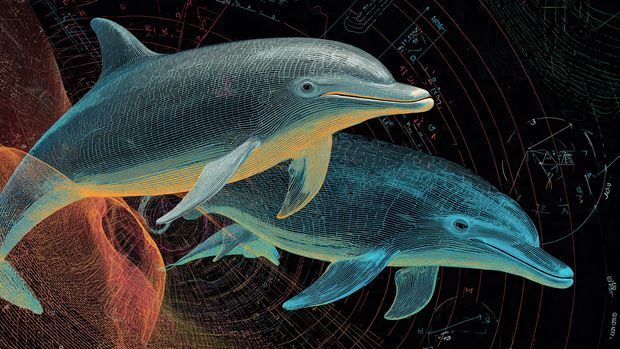
Dolphins are among the most intelligent and fascinating creatures in the animal kingdom. While their playful behavior and social interactions often capture human attention, one of the most remarkable aspects of these marine mammals is their natural “radar” system—scientifically known as echolocation. This incredible ability allows dolphins to navigate murky waters, locate prey, and communicate with precision, making them one of the ocean’s most skilled hunters.
In this article, we’ll dive deep into the science behind dolphin radar, how it works, its functions in hunting and navigation, and why it has fascinated researchers for decades.
What Is Dolphin Radar?
The term “dolphin radar” is a popular way to describe the dolphin’s ability to detect objects and navigate their surroundings using sound waves. Unlike human-made radar systems, dolphins rely on their biology to emit high-frequency clicks and interpret the returning echoes to form a mental map of their environment.
Key points about dolphin radar:
-
It is biologically built into their head, specifically in a structure called the melon.
-
Functions as both a navigation tool and a hunting aid.
-
Operates underwater, where vision is often limited.
This system is a natural sonar, allowing dolphins to “see” through sound waves with astonishing accuracy.
How Dolphin Echolocation Works
Echolocation is the process by which dolphins emit sound waves, detect the reflections (echoes) bouncing off objects, and analyze the information to understand their surroundings. Here’s a breakdown of how it works:
Step 1: Sound Production
Dolphins produce clicks in their nasal passages. These clicks are highly directional and can reach ultrasonic frequencies that are inaudible to humans.
Step 2: Sound Focusing
The clicks pass through the dolphin’s melon, a fatty organ in the forehead that focuses sound waves like a natural lens, directing them forward into the water.
Step 3: Echo Reception
When sound waves hit an object—such as a fish, obstacle, or another dolphin—they bounce back. Dolphins receive these echoes through their lower jaw, which is connected to the inner ear, enabling precise detection.
Step 4: Brain Processing
The dolphin’s brain interprets the returning echoes to determine:
-
Distance to the object
-
Size and shape
-
Speed and movement direction
-
Texture and density
This allows dolphins to create a detailed “image” of their environment entirely through sound.
Dolphin Radar in Hunting

One of the primary functions of echolocation is hunting and foraging. In the often murky and dark waters of the ocean, vision alone is insufficient to locate prey. Dolphin radar solves this problem by allowing:
-
Accurate targeting: Dolphins can detect the size and movement of fish, squid, or crustaceans.
-
Coordinated hunting: In groups, dolphins use sonar clicks to communicate and organize hunting strategies.
-
Detection of hidden prey: Echoes reveal prey hiding under sand, rocks, or vegetation.
Echolocation is so precise that dolphins can even distinguish between different types of fish by size and density.
Dolphin Radar in Navigation
Dolphins also use their natural radar to navigate vast and complex underwater environments:
-
Obstacle avoidance: Detect reefs, boats, and underwater structures.
-
Orientation: Travel long distances in the open ocean without getting lost.
-
Social cohesion: Maintain formation with pod members, even in low-visibility conditions.
This ability is essential for survival, especially in dark, murky waters or during night-time travel.
Communication and Social Use
While echolocation is primarily for hunting and navigation, some clicks and whistles also play a role in social communication:
-
Dolphins can send location signals to pod members.
-
High-frequency pulses may indicate alertness or warnings.
-
Specialized clicks may serve as unique “signatures” for individual dolphins.
Thus, dolphin radar is both a practical tool and a social instrument, blending survival and interaction seamlessly.
Fascinating Facts About Dolphin Radar
-
Ultra-Precise Detection: Dolphins can detect objects as small as a golf ball from more than 50 meters away.
-
Variable Frequencies: Dolphins adjust the pitch and intensity of clicks depending on distance and object type.
-
Multi-Purpose: Echolocation allows hunting, navigation, and even playful exploration.
-
Rapid Processing: Dolphins can interpret echoes in real-time, enabling fast reaction in hunting or avoiding predators.
-
Inspiration for Human Technology: Scientists study dolphin radar to improve sonar systems and underwater robotics.
Conclusion
Dolphin radar is one of nature’s most remarkable inventions. Through echolocation, dolphins navigate complex underwater landscapes, locate prey with pinpoint accuracy, and communicate with their pod in ways humans are still striving to fully understand. Their sonar abilities showcase both the adaptability of marine mammals and the incredible intelligence dolphins possess.
By studying dolphin radar, we not only gain insight into the lives of these majestic creatures but also inspire innovations in technology, robotics, and sonar science.
