

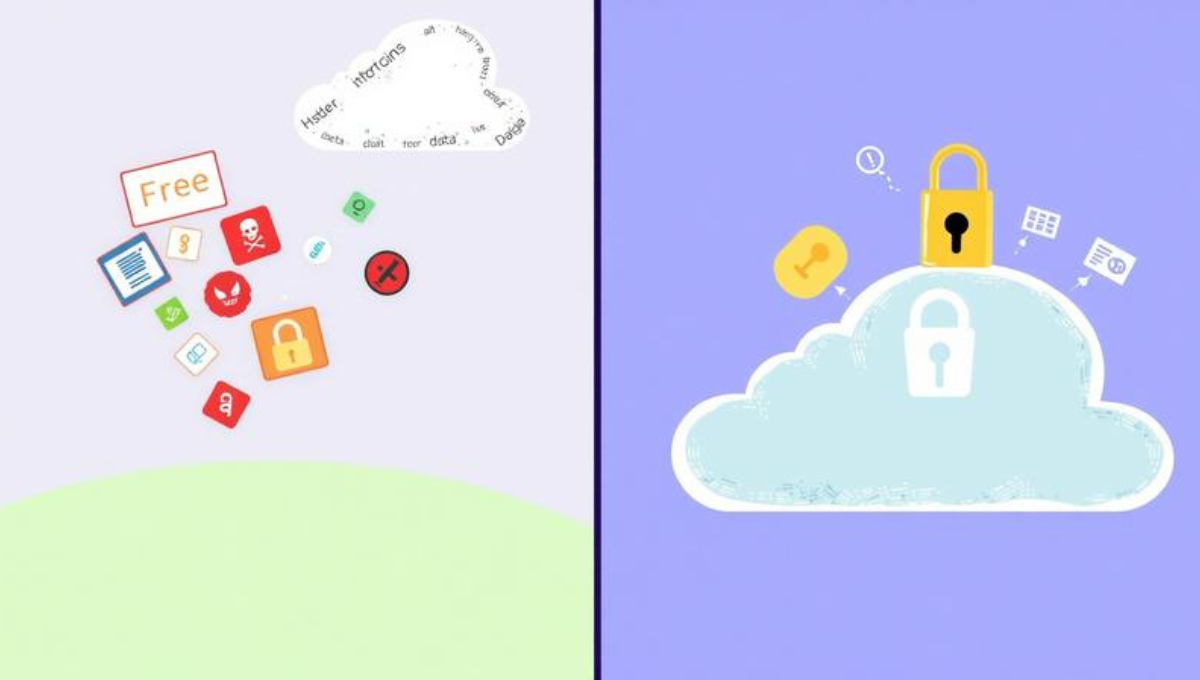
The appeal of free cloud storage is undeniable. You get space for your files, automatic syncing across all your devices and the convenience of accessing your documents from anywhere without spending a penny. Millions of people use these services every day without giving it much thought. But “free” rarely means what we think it means.
The data harvesting economy
Most free online storage services operate on a simple premise: if you’re not paying with money, you’re paying with something else. That something is usually your data and your privacy.
Google Drive, for instance, scans your files to serve you targeted advertisements. Dropbox’s privacy policy grants them broad access to your content. Microsoft OneDrive integrates with their ecosystem in ways that constantly feed data back to their servers. These companies aren’t charities. They’re businesses worth billions—and that value comes from somewhere.
The information they gather isn’t just about what you store. It’s about when you access files, who you share them with, what devices you use and patterns in your behaviour that can be monetised. Your personal photos, work documents, and private correspondence become data points in their advertising algorithms.
Security vulnerabilities you didn’t sign up for

Beyond privacy concerns, free storage services from major tech companies often present significant security issues. The sheer scale of these platforms makes them attractive targets for hackers. When millions of users store their data in one place, the potential payoff for cybercriminals is enormous.
The cloud storage security risks extend from simple misconfigurations to sophisticated attacks. Many free services offer only basic encryption, meaning your files are readable by the company and potentially by anyone who gains unauthorised access to their systems.
Account takeovers happen more often than you’d think. Weak password policies, limited two-factor authentication options and inadequate monitoring mean that your files could be accessed by someone else without you realising it for days or weeks.
When “free” online storage becomes expensive
The hidden costs compound over time. You start with free storage, fill it up quickly, and then face constant prompts to upgrade. Your workflow becomes dependent on their ecosystem. Switching providers means hours of downloading, re-uploading, and reorganising files.
Meanwhile, your data continues to generate value for them through advertising, AI training, and market research. The few pounds you might have paid for private storage pale in comparison to the value they extract from your information over months and years.
A better kind of free
Here’s what most people don’t realise: not all online storage services operate this way. Privacy-focused providers offer free tiers that don’t monetise your data. They make money from premium subscriptions, not from scanning your files or selling your information to advertisers.
These services use zero-knowledge encryption, meaning even the company itself cannot access your files. Your data remains yours, whether you’re on a free or paid plan. The difference is in storage capacity and features, not in how they treat your privacy.
The smart approach is choosing providers whose business model aligns with your interests. Free storage can work perfectly well when the company isn’t built around harvesting your data. You just need to know which ones respect your privacy and which ones see you as the product.
Your files deserve better than being used as fodder for advertising algorithms. Look for services that treat storage as their business, not your data.
